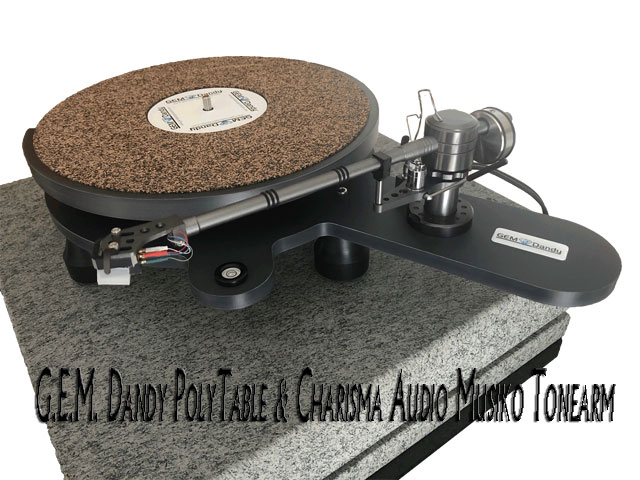
G.E.M. Dandy PolyTable & Charisma Audio Musiko Tonearm by Dave Thomas
When Necessity Breeds Musicality
 A funny thing happened on the way to the Musiko. That’s Musiko, as in the unipivot tonearm from Charisma Audio. I reviewed the wonderful Charisma MC-2 moving coil phono cartridge about five years ago and have been dying to try more of their products ever since. So when Charisma’s Bernard Li offered me the opportunity to review the Musiko, I jumped all over it. A few days later, I received an email from Li saying the arm was on its way. It was at about that same time that I came to a frightening realization. My reference table, the Small Audio Manufacture Aldebaran, does not have a tonearm board that can accommodate the Musiko. I thought about checking with all of my audiophile friends to see if one of them had a table that I could borrow to do the Musiko review with. Luckily, Li had an even better idea. Li’s good friend George E. Merrill, the designer of the legendary “Merrill Heirloom” turntable and founder of G.E.M. Dandy Products, Inc., has a turntable called the PolyTable that was fitted with an armboard that could accommodate the Musiko. Problem solved, and now I would have the privilege of also reviewing the Polytable. Life was good… well except for the COVID-19 pandemic, a Titanic full of civil unrest, and the death of my 15-year-old Boston Terrier, Max.

Musiko Tonearm
The Musiko was the first piece to arrive. It was nicely packed in a cardboard box filled with Styrofoam peanuts. Inside that box was a lovely wooden box with the Charisma logo and Musiko Tonearm engraved in the wood. Inside the wood, the box was grey foam rubber with cut-outs for the armtube and the arm’s other parts. The pieces are isolated and sat snuggly in their compartments so that nothing could get damaged in transport. Hopefully, this much thoughtful design in the packaging bodes well for the arm’s design and performance. We shall find out soon.
The Musiko is a medium mass tonearm. Unlike most unipivot tonearms, which use silicone to stabilize and dampen the arm, the Musiko uses a ring magnet. It does not invite the mess of silicone fluid and has much better stability and control. Also, the magnetic damping system is adjustable. Rubber rings are used to dampen the armtube and counterweight. It will accommodate most cartridges, and since it does not come with a tonearm cable, feel free to use any cable with a standard female DIN. The Musiko’s internal wiring and male DIN plug are made by Cardas. I would be mounting my recently acquired Air Tight PC7 cartridge, and the tonearm cable I used was the TiGLON M.G.L. 10P.

G.E.M. Dandy PolyTable
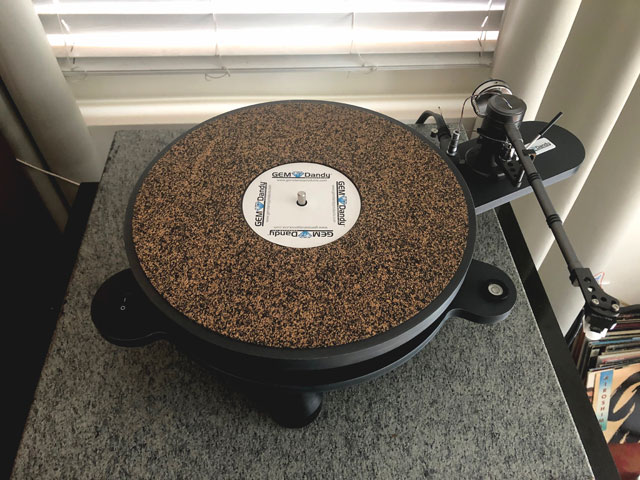
The G.E.M. (George E. Merrill) Dandy Polytable is a fascinating table to me. It’s designed as if George Merrill simply decided to see what he could do if all he wanted to do was build a table that focused strictly on the things that lead to good music reproduction. Large, monolithic looking plinth, GONE! Massive platter with lead or precious metal inserts, SEE YA! Gigantic chrome and acrylic stand for the table to sit on, OUTTA HERE! Instead, what he’s produced closely resembles the little Christmas tree that Charlie Brown brought home. The looks of the PolyTable are so spartan that it makes a Rega Planar 3 look gaudy. But what Merrill has focused on here is energy management through engineering and parts reduction. Instead of a massive plinth, you get a minimalist one that is designed to minimize energy flow. The plinth is basically the platter’s diameter with two short arms sticking out to hold the power switch and a built-in bubble level, and a long arm to mount your tonearm to.
.jpg?KeepThis=true&TB_iframe=true&height=430&width=700)
The PolyTable used to be available with a Jelco tonearm, but since the demise of Jelco, Merrill simply makes the table without an arm. Luckily, the PolyTable will accommodate most arms, even arms as large as 12″. There are no vibrating materials used (such as metal or glass) in the signal path, and the platter is a simple two-piece system with a damped drive platter. On top of the platter is Merrill’s own R.C.C. (Rubber Cork Compound) mat that works to dampen the vinyl and decouple any platter energy. The PolyTable uses an oil-filled spindle bearing, and a custom made drive motor that is stable and quiet. But you can upgrade the table by adding Merrill’s Digital Motor Drive ($790.00). There are three adjustable feet at the bottom that can be used with the bubble level to achieve proper table balance and minimize resonance.
For a little extra money, the PolyTable also comes in two other forms: The Super ($2,495.00) comes with the Digital Motor Drive and Fluid Damped Motor, and the Signature ($2,995.00) comes with a two-piece plinth that allows the motor and bearing to be isolated from the arm. This review is of the Standard version.
Setup
 Unboxing and setting up the PolyTable was about as idiot-proofed as it gets. The setup instructions Merrill supplies walk you through the process and remove the guesswork. I wanted to spend some time with a tonearm that I was familiar with on the table before getting into it with the Musiko. So I installed my longtime favorite, the Abis (Sorane) SA-1.2 tonearm, and spent a couple weeks with it doing duty with the Merrill. The SA-1.2 is comparably priced to the Musiko and also mates well with the Air Tight cartridge.
My immediate reaction to the sound of this combination was very exciting. I played a lot of recordings that excelled in dynamics, especially percussions. The first song of note was “Nardis” from the Mobile Fidelity 45RPM pressing of Patricia Barber’s Café Blue. If you’ve been anywhere near a C.E.S. during the last decade, you are no doubt familiar with this feast of percussions. What the PolyTable and SA-1.2 arm do with this track is impressive. There is so much air around realistically rendered instruments that I jumped up to turn out the lights to become wholly immersed in the performance.
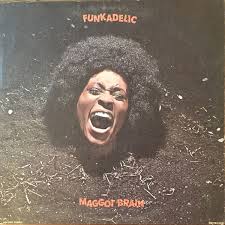 The same thing happened when I listened to “Maggot Brain” from Funkadelic’s 7″, 33 1/3, E.P. bonus pressing that came with the 1978 released album of One Nation Under A Groove [Warner Bros.]. Eddie Hazel’s live performance is the best version of this classic I’ve ever heard. And when reproduced the way it is through this system, it is something you simply must listen to for yourself. Over a couple weeks, I listened to the PolyTable/SA-1.2 combo a lot and knew that the Musiko would have to be something special to keep up, let alone surpass what I got from this combo. It was now time to get down to business and get the Musiko mounted on the PolyTable.
Down to Business
 Before getting into the nitty-gritty of this review, you must appreciate my lack of competence with turntable/tonearm setup. Usually, I bring in someone more adept than me to make sure that I get the best results. But after looking at the setup instructions that came with Musiko, I decided to take it on myself. I already told you how idiot-proofed the instructions that came with the PolyTable were; well, the Musiko’s instructions were even better! I mean paint by numbers isn’t this easy. It took me less than an hour to set up the table, arm, and cartridge. Frankly, I could recommend the table and arm on that basis alone. So let’s get on with the music.
I started my critical listening with the same notable songs I played through the SA-1.2. Once again, listening to “Nardis” was extremely enjoyable, and the amount of air and detail pulled from the percussive instruments within the soundstage was fantastic. But when listening to Maggot Brain’s live version, I got a glimpse into what the Musiko does exceptionally well. At about the 3:33 point in the song, someone whistles, and it sounds as if it flies across the audience. I mean, listening to that song while sitting in the dark made my head reflexively look up to see where that sound had come from. The Musiko/PolyTable combo renders live music, not just with a well-defined soundstage, but with a realistic portrayal of the live venue.
 Now, I was loading up on live recordings to bear this out. One of my favorites is the Ray Brown Trio’s Summer Wind: Live at the Loa [Concord]. “Can’t Help Lovin’ Dat Man” is a track that, when reproduced well, draws you into an intimate nightclub that gets set on fire (figuratively speaking) by a raucous performance from pianist Gene Harris. By the time this song reaches its crescendo, you may unconsciously find yourself standing and applauding. I’ve seen it happen. The Musiko/PolyTable combo does such a wonderful job of recreating the live soundstage that it allows you to connect with performances on a higher level. This is the essence of being an audiophile. Being able to get drawn into a live musical performance even though you weren’t at the live event. Thankfully, you can still pour yourself two fingers of Glenlivet and almost get there.
Going into this review session, I fully expected that this system would do a great job of rendering everything in the middle to higher frequencies with the flare that I enjoyed while listening to the Charisma MC-2 and spending time with my brother’s Merrill Heirloom. Every product I’ve heard from these companies excelled in musicality. But the surprise was in the weight and authority that was pulled from the records I listened to. I’m not heavily into classical music but, on occasion, will find myself becoming smitten with certain movie soundtracks. This was the case with John Williams’ performance of all of my favorite films from the 70s and 80s, including Star Wars, Raiders of the Lost Ark, and Close Encounters of the Third Kind. So when Williams performed selections from them all in an unforgettable live concert album called John Williams In Vienna [Deutsche Grammaphon], I hunted down a copy as soon as it was available. The concert took place back in January of 2020 in the Vienna Musikverein, where Williams conducted the Vienna Philharmonic Orchestra.
I have to say this now. Even if you are not a classical music fan, there is simply nothing like listening to something like “Imperial March” from Star Wars on a well-designed system. The thundering timpani and the huge brass section is an experience. The same can be said for “Raider’s March,” from Raiders of the Lost Ark. Every track of this two-disc package is a massive and splendid rendering of music from some of the most memorable films of this and the last century. With Christmas on the horizon, I can’t think of a better gift for an audiophile. This music was made for this type of front-end. The Musiko/PolyTable combo, with its synergistic relationship with live music, will provide countless hours of listening pleasure.
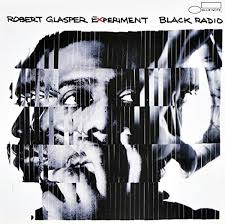 Now don’t be thrown off by my insistence on listening to live music. This combo definitely does a beautiful job with well-recorded studio productions such as The Robert Glasper Experience’s “Black Radio” [Blue Note]. This album features some of today’s best young R&B and Hip-Hop artists, including Erykah Badu, Lupe Fiasco, and Bilal. Among my favorite tracks is “Gonna Be Alright (F.T.B.),” featuring Neo-Soul songstress Ledisi, and “Move Love,” featuring King. These are both nice tracks on their own but what brings them to life is Glasper’s deft touch on the piano. What’s important here is how easily you can follow the keys’ tickling on an R & B song. That’s a pretty neat trick for an anologue front-end, and the Musiko/PolyTable/PC-7 does it admirably.
Conclusion
We’ve been watching this revival of vinyl for a few years now. Some companies seem to be trying to take advantage of it by flooding the marketplace with bigger, bolder, more audacious, and ridiculously expensive new designs. Some of these folks are apparently not familiar with “the law of diminishing returns.” Thank goodness there are still plenty of people like the folks at Charisma Audio and the great George E. Merrill, producing well-designed, attractive, and affordable products.
Had I not already had a system that I’ve put a lot of time into, I could easily live with these products for a long time. The Charisma Audio Musiko tonearm and G.E.M. Dandy PolyTable are highly recommended.


dave thomas
Specifications:
Charisma Audio Musiko
Bearing type: Unipivot
Total mass: 1100 g
Effective mass: ~12 g
Total length: 297 mm
Effective length: 237 mm
Mounting distance: 222 mm
Overhang: 15 mm
Offset angle: 15 mm
Cartridge weight: 5 g to 17 g
Price: $2,500.00
G.E.M. Dandy PolyTable
Type: Belt-driven turntable with two platters
Tonearm: Accommodates most up to and including 12 + inchs
Speeds: 33rpm and 45rpm Dimensions: 19″ x 7″ x 12″
Weight: 12 lbs.
Price: Standard $1,495.00, Super $2495.00 and Signature $2995.00)
Address:
Charisma Audio
Suite 86, Unit A14
4261, Highway 7
Markham, Ontario
Canada L3R 9W6
Telephone: (905) 470-0825
Fax: (905) 470-7966
Email: charisma@rogers.com
Website: www.charismaaudio.com
G.E.M. Dandy Products, Inc.
820 Herbert Rd
Suite 109
Cordova, TN 38018
USA
Phone: 901-751-3337
Website: www.hifigem.com
Dave’s Associated Equipment
Analog Front End
Small Audio Manufacture Aldebaran Turntable
Small Audio Manufacture Calista II Tonearm
Pass Labs XP-15 Phonostage
Abis SA-1.2 tonearm
Air Tight PC-7 phono cartridge
Digital Front End
Classe CDT-300 Transport
Vitus Audio RD-101 DAC/Linestage
Bricasti M5 Network Player
Roon Software
Amplification
Bel Canto Ref 1000 Mono Amps (bass on MG20)
Loudspeakers
Tekton Design Double Impact S.E. Loudspeakers
Cabling
Soundstring GEN II Platinum Cables
AudioQuest OptiLink optical cable
AudioQuest Forest coaxial digital cable
Accessories
Adona Corporation Zero G.X.T. Equipment Stand
Acoustic Revive RTP-2 Ultimate Power Supply Box
Isoclean 60A3 II Power Conditioner
Entreq Vibbeaters
Entreq AC Wraps